Wire AI into a Core Workflow This Quarter
You will learn a step-by-step method to turn a routine business task into a measurable AI win, from spotting the right process to choosing the tool after…
You will learn a step-by-step method to turn a routine business task into a measurable AI win, from spotting the right process to choosing the tool after the workflow is defined and keeping a human check in place.
Map the recurring work that consumes the most hours
Start by pulling a simple report from your time-tracking or ERP system. List every task that repeats at least weekly and note the total hours each consumes. Rank the list from highest to lowest hour count. The top three items are the best candidates for automation because they offer the biggest time-recovery potential.
When you build the list, verify that the tasks are well defined, have clear inputs and outputs, and do not already rely on a proprietary rule engine. If a task is a manual data entry step, a document-to-data extraction model can replace it. If the task is a reconciliation between two systems, an AI-driven matching engine may be appropriate.
- Pull the task log for the past month.
- Add a column for average weekly hours.
- Sort descending and highlight the top three.
This quick audit gives you a concrete view of where AI can start delivering value.
Pick one workflow and measure it before any tool arrives
Select the highest-ranked task that also has a clear start and end point. For example matching invoices to purchase orders. Document the current process in a few sentences, then capture the baseline metrics that matter to the team: number of items processed per hour, error rate, and time to resolve exceptions.
Run the existing workflow for a full week and record the numbers. The baseline becomes the reference point for any AI experiment. Keeping the measurement simple avoids analysis paralysis and lets you see the impact of a single change without confounding variables.
When you have the baseline, set a target improvement that is realistic, such as reducing manual verification time by a quarter. This target will guide the tool selection and later evaluation.
Choose the AI tool after the workflow is defined, not before
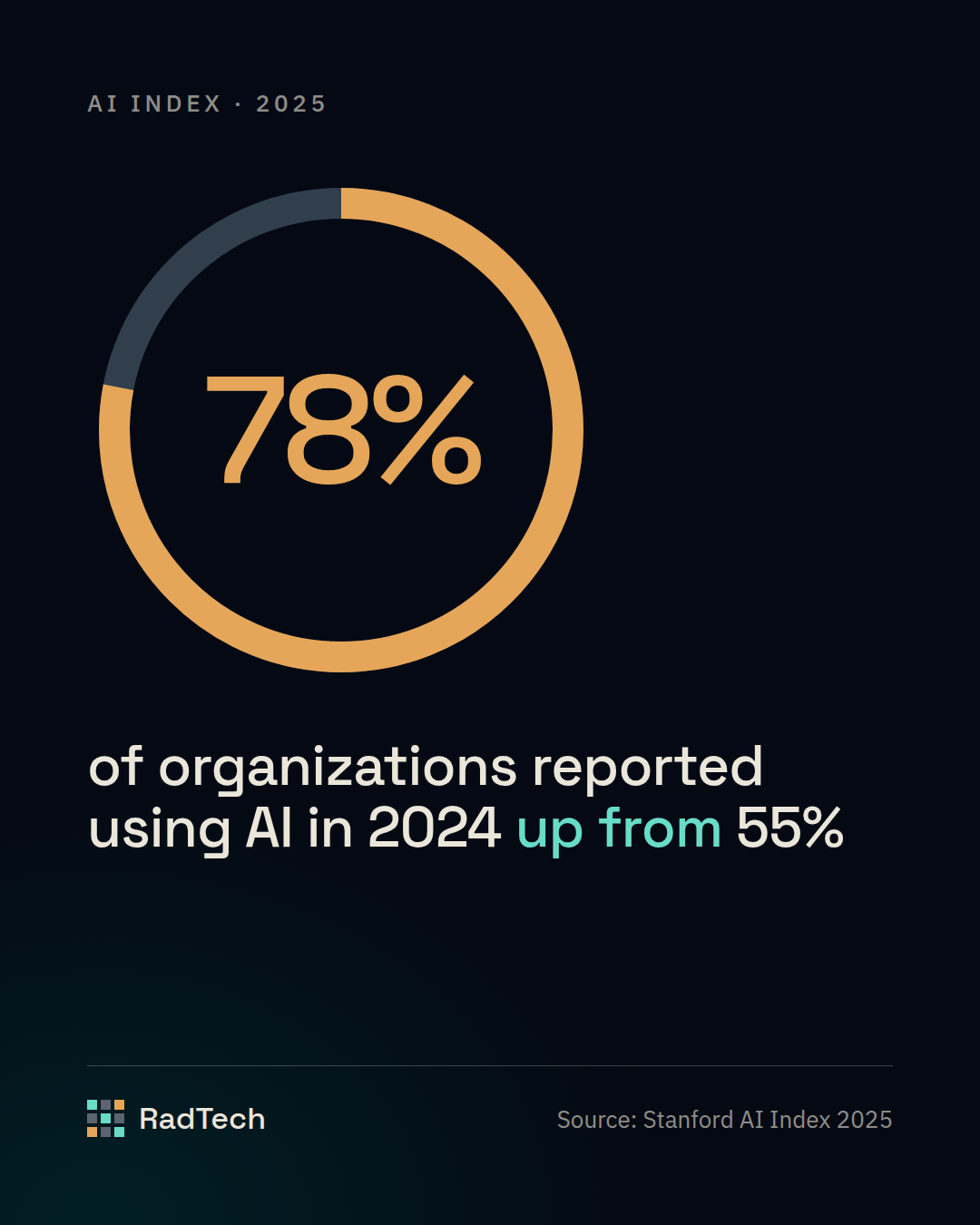
With the workflow mapped and baseline numbers in hand, start evaluating vendors based on three criteria: fit to the data format, ease of integration with your existing finance stack, and the ability to keep a clerk in the loop for verification. The Stanford AI Index 2025 notes that 78% of organizations reported using AI in 2024, up from 55% the year before, indicating that many teams are already experimenting and that off-the-shelf models are widely available.
Ask each vendor to run a short proof of concept on a sample set of invoices. Compare the accuracy of line-item extraction, the latency of matching, and the effort required to embed a human check before posting. Do not commit to a subscription until the model meets the baseline improvement target and the verification step can be performed within the existing team's workload.
Selecting the tool after the workflow is defined ensures that the technology is a solution to a known problem, not a driver of a new, untested process.
Implement, keep verification, and track the before-after gap
Deploy the chosen model in a sandbox that mirrors the production environment. Connect the AI output to the same interface the clerk currently uses, and require a manual sign-off for each match. This verification step protects accounting accuracy and gives the team confidence in the new system.
Run the pilot for a full cycle, capture the same metrics used for the baseline, and calculate the delta. If the error rate stays within acceptable limits and the processing speed meets the target, expand the integration to the full invoice stream. If the numbers fall short, revisit the data preprocessing or consider a different model.
- Record post-implementation hours per invoice.
- Log any mismatches caught by the clerk.
- Compare the new error rate to the baseline.
Continuous monitoring lets you fine-tune prompts, retrain the model with fresh data, and gradually reduce the reliance on manual checks as confidence grows.
What to do next
Start with the hour-ranking exercise, pick a single matching workflow, and run the baseline measurement. When the numbers are clear, we can help you select the right AI model, build the integration, and keep the verification step in place so the system adds value without risking accounting errors. We build the product, and we help you decide where AI pays.
// Sources
- The 2025 AI Index Report · Stanford HAI